
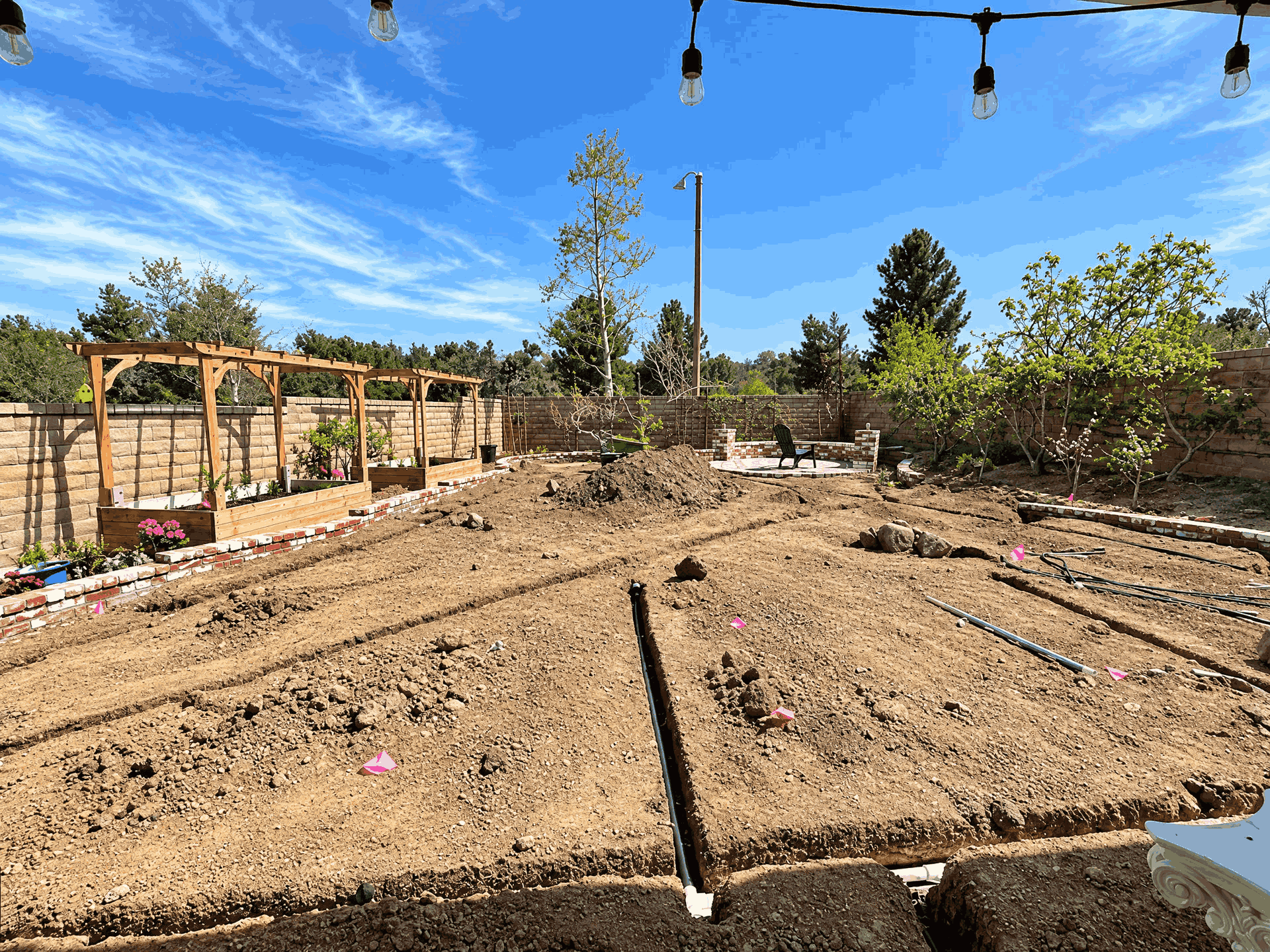
A puddle that drains quickly is different from water that repeatedly collects beside a patio, moves toward a doorway, or leaves one part of the lawn soggy after the rest has dried. The right fix depends on where the water comes from, how it moves across the property, and whether the soil can absorb it or a suitable outlet is available. A site assessment should come before choosing a French drain or any other drainage product.
Leafs-U-Green’s landscape construction service lists drainage improvements among its services and says project planning considers the property’s existing conditions, drainage, irrigation, soil, and goals.
Track where the water starts and goes
When you notice standing water, record the date, weather, approximate time it appears, and how long it remains. Take photos during and after the event, if it is safe to do so. Note whether the wet area appears after rainfall, after sprinklers run, or during dry weather.
Look for possible sources such as a roof downspout, paved surface, uphill part of the yard, irrigation zone, or low spot in the lawn. A leak can resemble a drainage problem, and the two can occur together. If a wet patch follows an irrigation schedule or appears when it has not rained, mention that when you arrange an evaluation. The company’s sprinkler and irrigation repair service covers issues such as leaking valves and damaged underground lines.
Also note what the water does next. Does it move toward the foundation, collect beside a retaining wall, cross a walkway, wash soil or mulch out of a planting bed, or flow toward a neighboring property? Does the same low spot stay wet after the surrounding ground dries? These details can help distinguish surface runoff, slow infiltration, and irrigation problems.
What should a drainage assessment cover?
A useful walkthrough follows the property from high points to low points. It should consider surface slopes and grading, patios and other hard surfaces, roof drainage and downspouts, soil conditions, planting beds, existing drains, retaining features, and how water enters and leaves the yard.
The assessment should also identify a practical destination for collected water. Ask how the plan accounts for walkways, neighboring properties, and heavy storms. Do not assume that water can be discharged to a street or public storm drain; confirm whether the proposed route is appropriate and whether any approval is needed.
Soil, slope, and grading work together. Water can pond in a low spot, run across a compacted surface, or follow the edge of a patio. Irrigation issues may contribute to a soggy area even when it has not rained. If nearby grass is dry, uneven watering may also be part of the problem.
Choose a fix after identifying the cause
Possible improvements include adjusting surface grading, redirecting a downspout, improving an existing drain, adding a swale, or considering an infiltration feature. The right option depends on the source and volume of water, soil, slope, property layout, buried utilities, and available outlet.
A French drain is not automatically the answer to visible standing water. It may be considered for certain subsurface water problems, while surface runoff may call for a different approach. Ask the contractor to explain what the proposed work is intended to change, where the water will go, and what will happen during a heavy storm.
A rain garden may be worth discussing when the site and soil are suitable. UC Agriculture and Natural Resources describes rain gardens as shallow landscape areas that collect runoff from nearby roofs, driveways, and streets so it can infiltrate. Its California-focused guidance also emphasizes choosing an appropriate location and considering soil drainage. A rain garden is one option, not a universal fix.
Before excavation, ask who will arrange utility marking through DigAlert/811 and how private irrigation or drain lines will be identified. DigAlert explains that utility members mark facilities they own or maintain, so do not assume every buried line will be marked.
If the work involves grading or a connection to public drainage, confirm the requirements for the specific address and scope before work begins. Santa Clarita’s grading code lists permit requirements and exceptions; properties outside city limits may be subject to a different jurisdiction.
Get ready for the site visit
Before the appointment, gather photos from past storms, notes about when the problem began, and details about recent landscape work. Point out sprinkler zones, valve boxes, downspouts, patios, retaining walls, known buried utilities, and areas that have been repaired before. If an association or local agency sent you a notice, have it available.
A written estimate should identify the affected area and describe the planned work. Ask what is excluded, whether the plan depends on an existing pipe or outlet that still needs to be confirmed, how surface restoration will be handled, and whether the work includes testing after installation. Costs vary with access, excavation, materials, the length of the work, and conditions uncovered on site, so a generic price range may not reflect your property.
Common questions about backyard drainage
Does every wet area need a French drain?
No. Standing water is a symptom, not a diagnosis. The cause may involve grading, roof runoff, soil conditions, irrigation, or more than one factor. Have the source and intended water path evaluated before choosing a drainage system.
How can I tell whether the problem is irrigation or rain runoff?
Compare when the wet area appears with rainfall and sprinkler use. A patch that gets wet after an irrigation cycle, or remains wet during dry weather, may point to an irrigation issue. Timing and photos are useful clues, but they do not replace an inspection.
Do I need a permit for drainage work?
It depends on the property’s jurisdiction and the project’s scope. Santa Clarita’s grading code includes permit requirements and exceptions, so check with the appropriate local agency before grading, excavating, or connecting to public drainage.
What should a drainage estimate explain?
It should identify the problem area, the work being proposed, and the intended route for the water. Ask about outlet assumptions, restoration, testing, exclusions, and expected maintenance.
Leafs-U-Green lists drainage improvements among its landscape construction services and serves Santa Clarita homeowners. To request a property review, visit its Santa Clarita service-area page or landscape construction page. Bring your observations and ask the contractor to explain the cause and proposed water path before work begins.