
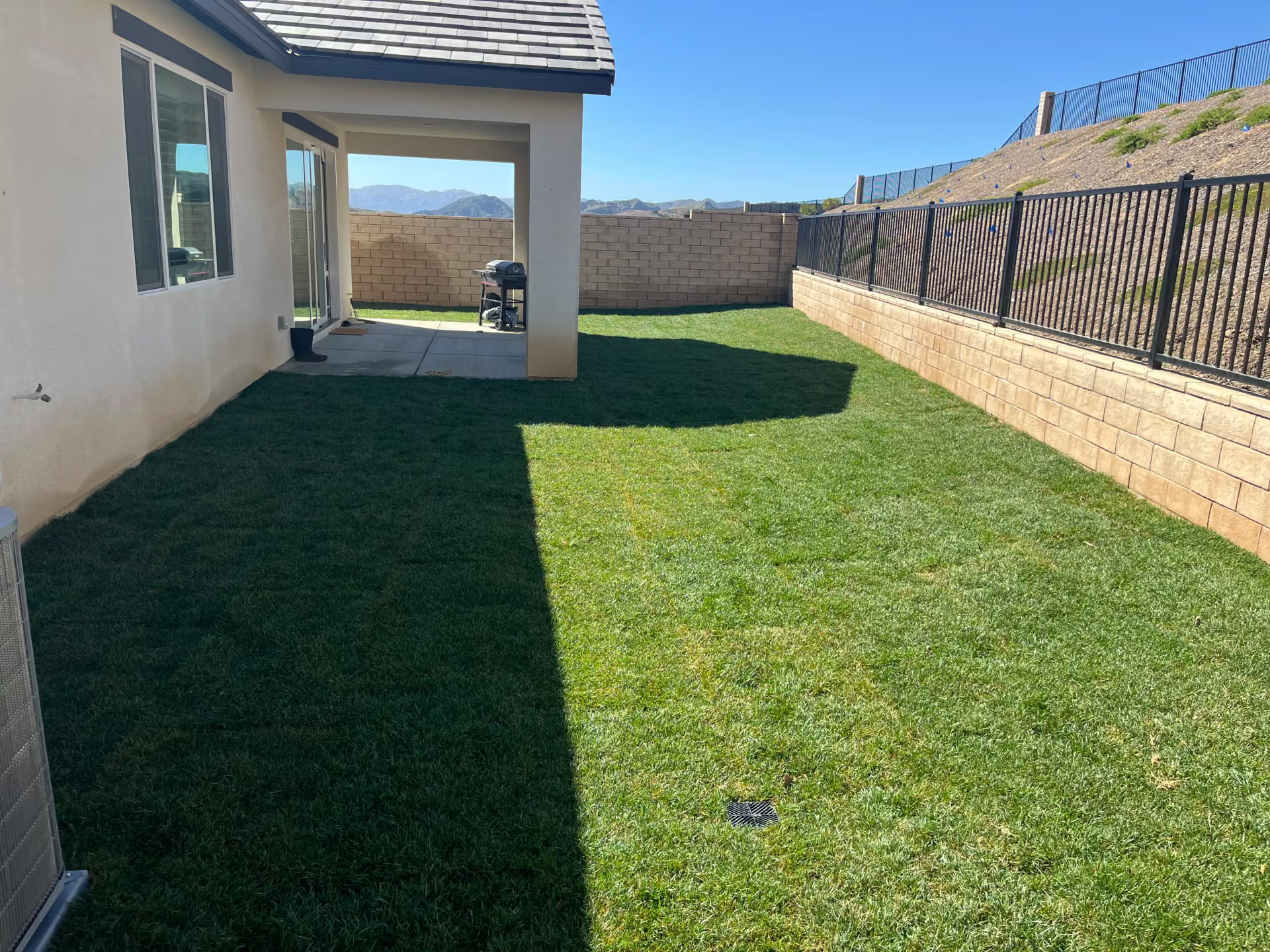
Fall can be a good time to overseed some Lancaster lawns, but it is not the right season for every grass type—and it does not automatically mean your lawn needs aeration. Before booking fall lawn aeration and overseeding in Lancaster, CA, identify the grass, look for the cause of thinning, and make sure the timing fits both the turf and the yard’s watering needs.
Identify the grass before choosing a seed
UC IPM says cool-season grasses are generally best seeded in September and October in California. Seedable warm-season grasses have a different window: mid-April to mid-May. Not all warm-season grasses are normally started from seed.
That distinction matters when choosing seed for your yard. A cool-season lawn and a warm-season lawn have different growth patterns and planting windows. Don’t choose a mix just because a neighbor uses it or the bag says “fall.”
Overseeding is often appropriate when a lawn is otherwise in good condition but a little thin. It can also be used to add winter color to some warm-season lawns by overseeding with cool-season grass. First identify and address the cause of thinning; seed alone won’t fix a broken sprinkler, persistent shade, poor drainage, heavy traffic, or unsuitable site conditions.
When might core aeration help?
Core aeration removes small plugs of soil. It may be worth assessing if areas with heavy foot traffic have thinning grass, the soil feels hard, or water repeatedly puddles or runs off rather than soaking in. Compacted soil can reduce water infiltration and make it harder for roots to grow.
Those signs are clues, not a diagnosis. Poor drainage can also cause standing water, while a clogged, tilted, or poorly aimed sprinkler head can leave dry patches that look like a turf problem. Aeration will not correct uneven irrigation, shade, or an underlying drainage issue.
Fall overseeding and aeration are also not automatically a package. UC IPM lists dethatching and aeration among the steps that may be used to prepare for overseeding. Its separate guidance for established lawns generally recommends aerating in spring while grasses are actively growing and avoiding summer heat. Ask why aeration is recommended for your particular lawn and whether the proposed timing fits its grass type and current condition.
Check irrigation and local watering rules
Before seed goes down, check whether sprinkler coverage is even. Mark thin areas, slopes, shaded corners, and places with heavy foot traffic. Watch each irrigation zone while it runs, if you can do so safely, and note where water pools or misses the lawn. Don’t dig around a suspected pipe or valve.
New seed needs suitable soil contact and regular moisture. UC IPM advises frequent, light irrigation to keep the soil moist but not soaked until the grass is established. For Lancaster homes, that watering plan also needs to account for local rules. The City’s published guidance recommends checking for broken or clogged sprinkler heads and directing water onto plants rather than pavement. Its published ordinance says lawn and landscape watering is prohibited between 10 a.m. and 10 p.m., except from October 31 through March 1. Check the City’s latest guidance before setting a schedule, especially if you plan to seed before October 31.
If the inspection points to coverage or equipment problems, Leafs-U-Green also offers sprinkler and irrigation repairs.
Questions to ask before booking
Before approving a treatment, ask the provider:
- What grass type do I have, and is this a suitable time to seed it?
- What do you think is causing the thin areas?
- Is compaction present, or would another repair be more appropriate?
- Which seed or treatment do you recommend, and what will the aftercare involve?
- What watering schedule will help the seed establish while following local rules?
A useful assessment should explain which parts of the lawn, if any, need aeration, overseeding, or a different fix. After seeding, follow the provider’s instructions and keep the soil moist rather than saturated. Adjust if water starts running off, and keep foot traffic off freshly worked areas for the period they recommend.
Common questions
Should I aerate and overseed at the same time?
Sometimes, but not automatically. Aeration may be part of overseeding preparation, but the need and timing depend on the lawn. Ask the provider to explain why both treatments are appropriate for your grass and conditions.
Does a thin lawn always need aeration?
No. Aeration is intended to address compaction. Thin areas caused by sprinkler coverage, shade, weeds, or drainage may need a different solution. UC IPM says aeration frequency depends on soil type and how the lawn is used; lawns with little or no activity may not need it.
How should I water after overseeding?
UC IPM recommends frequent, light irrigation to keep the seedbed moist but not soaked until the grass is established. The exact plan should reflect the seed, soil, weather, irrigation system, and Lancaster’s watering rules.
A practical plan for a thinner Lancaster lawn
Start with an assessment, correct the conditions that are limiting growth, then choose a treatment that fits the grass and season. That may mean adjusting sprinkler coverage, addressing compaction, controlling weeds, or waiting for a more suitable planting window—not doing every treatment at once.
Leafs-U-Green offers lawn-care services that include aeration, overseeding, and weed control, and serves Lancaster homeowners. Request an estimate and ask for a recommendation based on your grass, soil, irrigation, and goals before booking.