
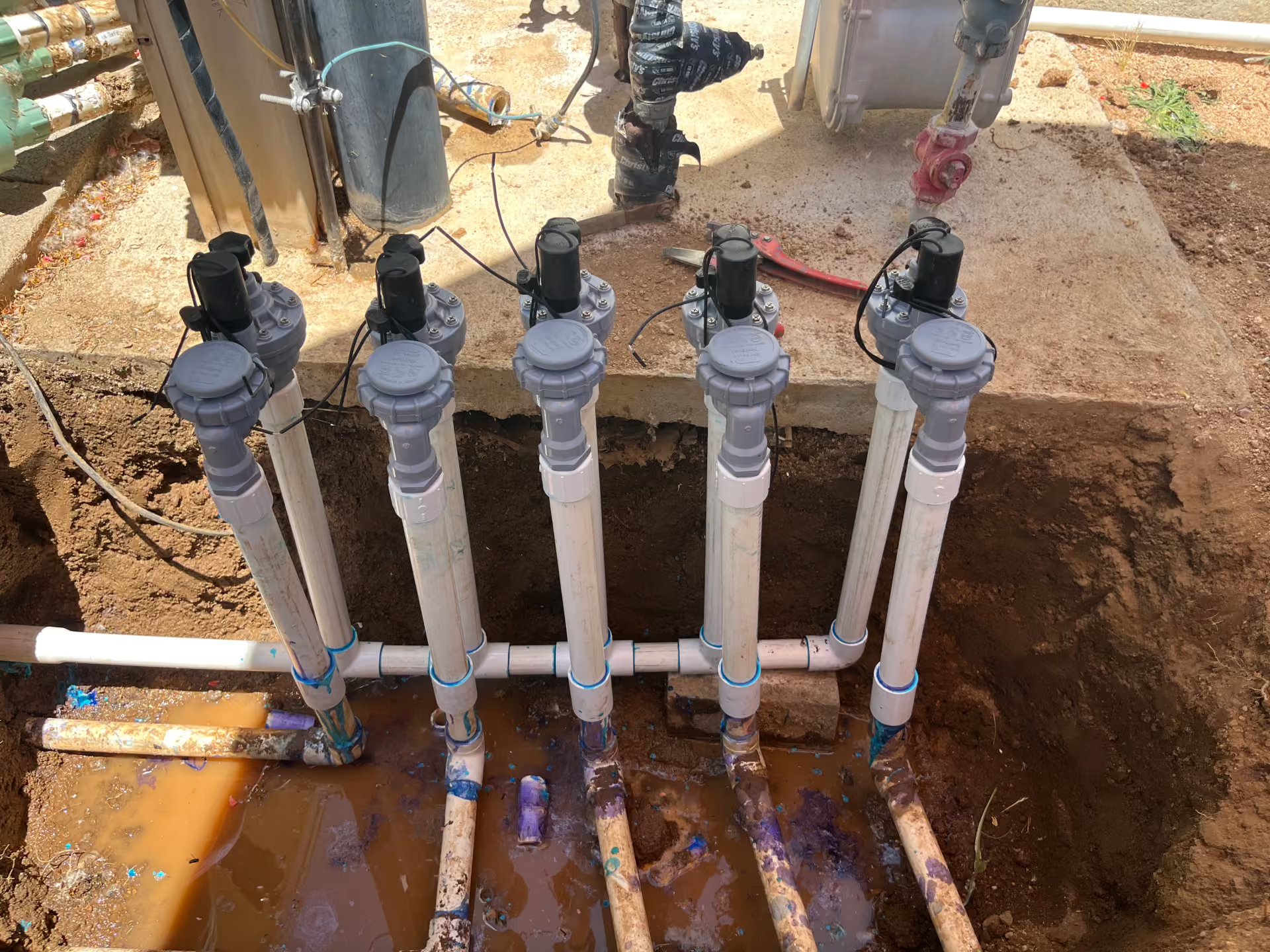
A Hunter sprinkler system installation in Lancaster should start with a yard and water-supply assessment—not a standard parts list. The walk-through helps the installer understand which areas need water, what should stay dry, and what the property’s available flow and pressure can support. Those details shape the proposed equipment, zones, and estimate.
Leafs-U-Green Landscape Services serves Lancaster homeowners with residential irrigation work, including Hunter systems. The company has served local homeowners since 2002. Here’s what to expect from a useful planning conversation.
The assessment should start with your yard
The installer should walk the property with you and identify the areas to irrigate: lawn, trees, shrubs, garden beds, and other planting areas. The walk-through should also note patios, driveways, walls, gates, walkways, and other areas where water should not land.
Point out any existing problems, such as a dry lawn edge, a bed that stays soggy, runoff on a slope, or heads that spray a wall. Explain what you want to preserve or change, too. Mature trees, new sod, future planting beds, and a planned patio can all affect the layout and installation.
If you’re renovating the landscape, plan irrigation alongside the other work rather than after planting or hardscape is complete. Leafs-U-Green’s landscape construction services include sod, planting, drainage, and selected hardscape work that may need to be coordinated with irrigation.
California’s Department of Water Resources recommends assessing the existing irrigation system, soil, and sun conditions when planning a landscape renovation. Its water-efficient landscaping guide also points homeowners toward choosing plants suited to their climate.
Water supply and pressure help determine the design
A system needs enough available water to run its planned zones. The installer may need to check the water source and relevant supply details, such as flow, pressure, meter, and service-line information. Hunter’s system-capacity guidance explains how these measurements inform residential irrigation capacity.
Static pressure is only one part of the picture. Pressure while a zone is running can be affected by factors such as pipe size, elevation, fittings, valves, and the equipment selected. If the proposal depends on an assumption about the water supply, ask what still needs to be verified.
You do not need to arrive with pressure or flow measurements already collected. A site assessment should help establish what the property can support before the design is finalized.
Zones should fit the landscape
A zone is a group of irrigation components that operate together. The layout should account for the plants and conditions in each area, as well as how each type of equipment applies water. Lawn, trees, and shrub beds may call for different equipment or schedules.
Head placement and nozzle selection matter, too. Hunter’s guide to matched precipitation rates for residential rotors explains how sprinkler arc and nozzle flow affect the amount of water applied across a zone. A sound plan should aim for appropriate coverage and avoid spraying sidewalks, driveways, and walls.
Ask the installer to explain why the proposed zones and equipment suit your yard. The number of zones should follow the site conditions and available water, not a fixed package or a number chosen before the property has been assessed.
Ask how the controller will be set up
The controller’s settings should be explained in plain language. Ask which areas correspond to each zone, how start times and run times are set, and what watering days are programmed. If the system includes a rain or other sensor, ask how it works and what it changes.
Find out how to pause the system and which settings may need adjusting as the weather changes or plants mature. A controller can help manage watering, but it cannot correct uneven coverage, a leak, or a poorly planned layout.
Make sure the estimate explains the scope
Before work begins, ask the estimate to identify:
- Which areas and zones are included
- What existing components will be reused, replaced, or added
- Whether controller setup and testing are included
- What digging or access the work requires, and whether disturbed areas will be restored
- Which assumptions—such as the final landscape plan or water-supply measurements—could change the layout or scope
If digging is planned, ask how utility locations will be checked before excavation. If a permit, backflow review, or other approval might apply, confirm who will check the requirements for the property and project.
There is no reliable universal installation price or standard number of zones for every yard. Property size and shape, access, existing equipment, trenching, and landscape work can all affect the scope. A site-specific estimate should explain what is included and what is not.
Expect a system walk-through after installation
Before the job is considered complete, ask to run each zone with the installer. This gives you a chance to check coverage, head direction, and visible leaks. Ask for a demonstration of the controller and make sure you understand how to pause the system and adjust its schedule.
If you already have an irrigation system, replacement may not be the only option. A broken head, valve issue, or controller setting may call for a targeted fix instead. Leafs-U-Green handles sprinkler and irrigation repairs, and its guide to common irrigation problems covers symptoms such as leaks, overspray, and dry areas.
Frequently asked questions
How many sprinkler zones does my yard need?
It depends on the yard layout, plant types, irrigation equipment, and available water supply. An installer should assess those factors before recommending a zone count.
Do I need to measure water pressure before the assessment?
No. You can share what you know, but the assessment is the opportunity to identify which water-supply information needs to be checked. Ask how flow and pressure will inform the design.
Can parts of my existing system be reused?
Possibly. A controller, valve, head, or line should be checked for condition and compatibility with the proposed layout before being included in the plan. Ask the installer to identify what the estimate assumes will be reused.
Will a new sprinkler system automatically lower my water bill?
Not automatically. Design and controller settings can help direct water where it is needed, but results also depend on coverage, maintenance, leaks, and the schedule. Ask how the plan addresses overspray and how you can adjust watering over time.
For a Hunter system assessment in Lancaster, contact Leafs-U-Green to discuss your yard and request an estimate.