Why Is My Sprinkler Zone Always Wet? Find Hidden Leaks
Got a sprinkler zone that’s always wet? Learn how to spot irrigation leaks, diagnose bad valves or broken pipes, and know when to call in a pro.
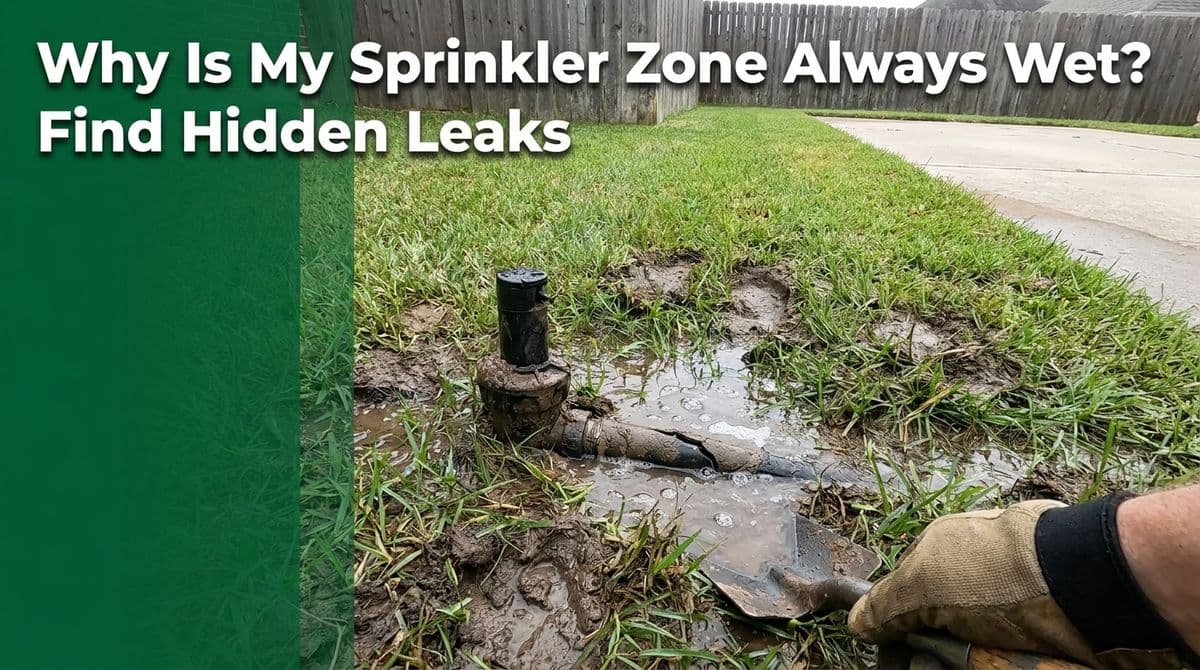
“There’s Always Water There…” – A Call That Turned Into a Lesson
We recently got a call from a customer – let’s call her Rita – who was worried about a soggy spot in her front garden. We had helped her before by replacing her sprinkler controller and doing some sprinkler work, so she knew something wasn’t right.
Rita told us, “In the front of that little garden area there is always a lot of water, and the water leaks all the way down to the grass. There’s like constant water. I can hear it.” She wasn’t sure if the gardener had hit something or if a valve we’d worked near was acting up.
If that sounds familiar – one sprinkler zone that always seems wet, or you hear water running even when the system is “off” – you’re probably dealing with a constant leak in your irrigation system. Let’s walk through how we diagnose this on calls like Rita’s, and what you can check at home before things get worse.
First Question: Is It Really “Always On” or Just Slow to Drain?
The first thing we try to sort out on the phone is whether water is actually running, or if it’s just standing. That tells us if we’re dealing with a bad valve, a low spot, or a break.
Here’s what you can look for:
- Listen carefully – Like Rita, if you can hear water (a faint hissing, rushing, or trickling) when the controller is off, that’s usually a leak or a valve that won’t close fully.
- Check your water meter – Turn everything off in the house (no washing machine, dishwasher, etc.). If the small triangle or digital flow indicator on your meter is still moving, you likely have a hidden water leak – sometimes in the irrigation system.
- Look for a pattern – If the area is only soggy right after watering but slowly dries out, you might just have low sprinkler heads in a low spot where water drains and collects.
In Rita’s case, she had constant moisture and could hear water, so we were already leaning toward a valve or line issue on that specific zone.
Wet Zone vs. Whole Yard: Why That Matters
Rita’s problem was isolated: one little garden area in the front, and then water tracking down into the grass. That’s actually helpful information for us.
Here’s how we think about it:
- Only one zone is wet – Likely a zone valve that isn’t closing completely, or a broken pipe or fitting feeding that zone.
- Multiple areas are soggy – Could be the main irrigation line, a pressure regulator, or a master valve issue.
- Wet right around certain sprinkler heads – Often a cracked sprinkler body, a leaking seal inside the head, or a fitting just below the head.
When Rita mentioned she also had several “Rainbirds” (sprinkler heads) she wanted replaced, that told us there could be a mix of old, worn sprinkler heads and possibly a leak underground.
Common Reasons a Sprinkler Zone Is Always Wet
Based on what we see in yards like Rita’s, these are the usual suspects:
1. A Valve That Won’t Fully Close
Each zone has a valve that opens when your controller tells it to water, and closes when the cycle is done. If dirt gets inside, the diaphragm wears out, or the solenoid fails, the valve can stick partially open.
Signs of a bad zone valve:
- One zone is always damp or slightly running.
- Sprinkler heads in that zone slowly seep water even when off.
- You can sometimes hear water moving at the valve box.
On calls like Rita’s, we’ll open the valve box, listen for flow, and sometimes manually turn the valve off to see if the water stops. If it does, we know that valve needs repair or replacement.
2. A Broken Pipe or Fitting in That Zone
If your gardener, landscaper, or even a shovel hits the line, you can get a crack or a split in the pipe. Water then runs continuously when the system is on, and may even leak slowly if the valve doesn’t seal perfectly.
What to watch for:
- Very soft or “squishy” ground in one spot.
- Bubbling water or a little “spring” when the system runs.
- A big jump in your water bill with no clear reason.
Rita mentioned she wasn’t sure if “the gardener did something over there.” That’s a clue we pay attention to, because we see line damage from edging and digging all the time.
3. Low-Head Drainage (Not a True Leak)
Sometimes the system is actually working fine – but the lowest sprinkler heads in a zone will drain out the line after each cycle. That can leave one corner of the yard wet for an hour or two after watering.
How to tell:
- The water slowly appears after a watering cycle, then dries between cycles.
- No sound of running water when the system is off.
- Your water bill looks normal.
This is more of a nuisance than a “leak,” and it can usually be fixed with check valves or by adjusting the layout.
Simple Checks Homeowners Can Safely Do
Before we come out, there are a few things we often walk customers through over the phone. You can try these if you’re comfortable:
- Turn off the irrigation at the shutoff (often near the water meter or backflow). If the soggy area starts drying and the sound stops, the leak is very likely in the irrigation system, not your house plumbing.
- Open the valve box and look for obvious water movement or a small “stream” around one valve.
- Run each zone manually from the controller and walk the yard. See if any heads are spraying oddly, bubbling, or not popping up fully.
- Mark suspicious spots with flags or anything visible. That helps us find issues faster when we arrive.
If at any point you’re unsure, or you see a lot of water moving, it’s usually safer (and cheaper in the long run) to have a pro pinpoint the problem.
When It’s Time to Call in a Pro
In Rita’s case, we scheduled a visit to inspect that front garden area, check the nearby valves, and replace the worn Rainbird heads she mentioned. That kind of combined issue is common in older systems: one problem reveals a few more opportunities to tune things up.
You should definitely bring in a professional if:
- The ground is constantly soggy, and you hear water even with the system “off.”
- Your water bill has suddenly jumped.
- You’ve tried turning off the irrigation shutoff, and you’re still seeing water.
- Valve boxes are full of water or mud, and you can’t tell what’s what.
A leaky zone doesn’t just waste water – it can damage plants, attract pests, and undermine walkways or foundations if left long enough.
If you’ve got a sprinkler zone that always seems wet, or you can hear water but can’t find the source, we’re happy to come out, do the detective work, and get your system running like it should again.