Full Irrigation Valve Rebuild That Fixed Soggy Spots and Wasted Water
A soggy patch in your yard or a mysterious wet spot near the foundation is usually your irrigation system trying to tell you something. Most of the time, it comes down to the valves. When valves start leaking - whether it's a worn diaphragm, a cracked solenoid, or years of mineral buildup - water ends up exactly where you don't want it.
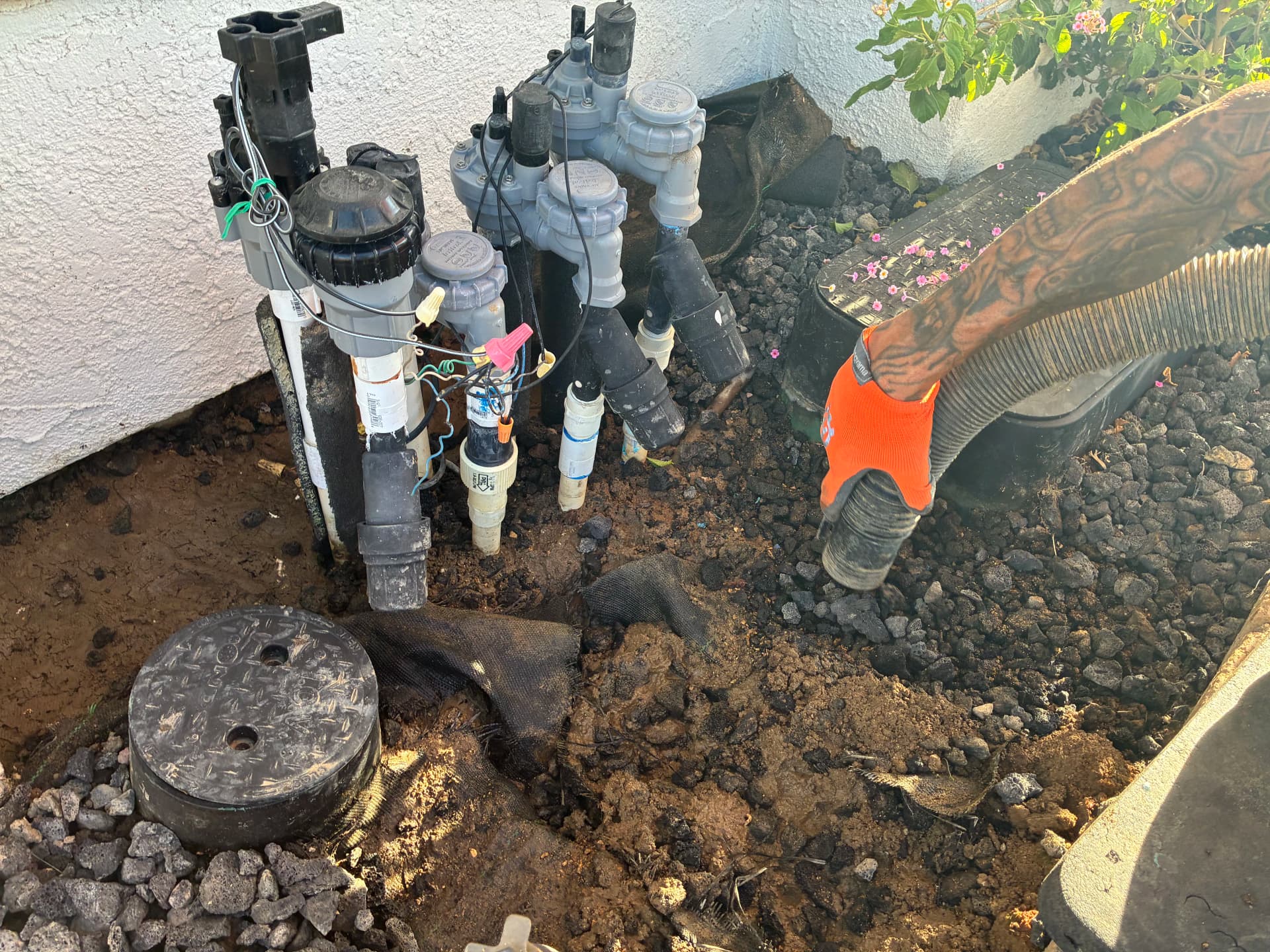
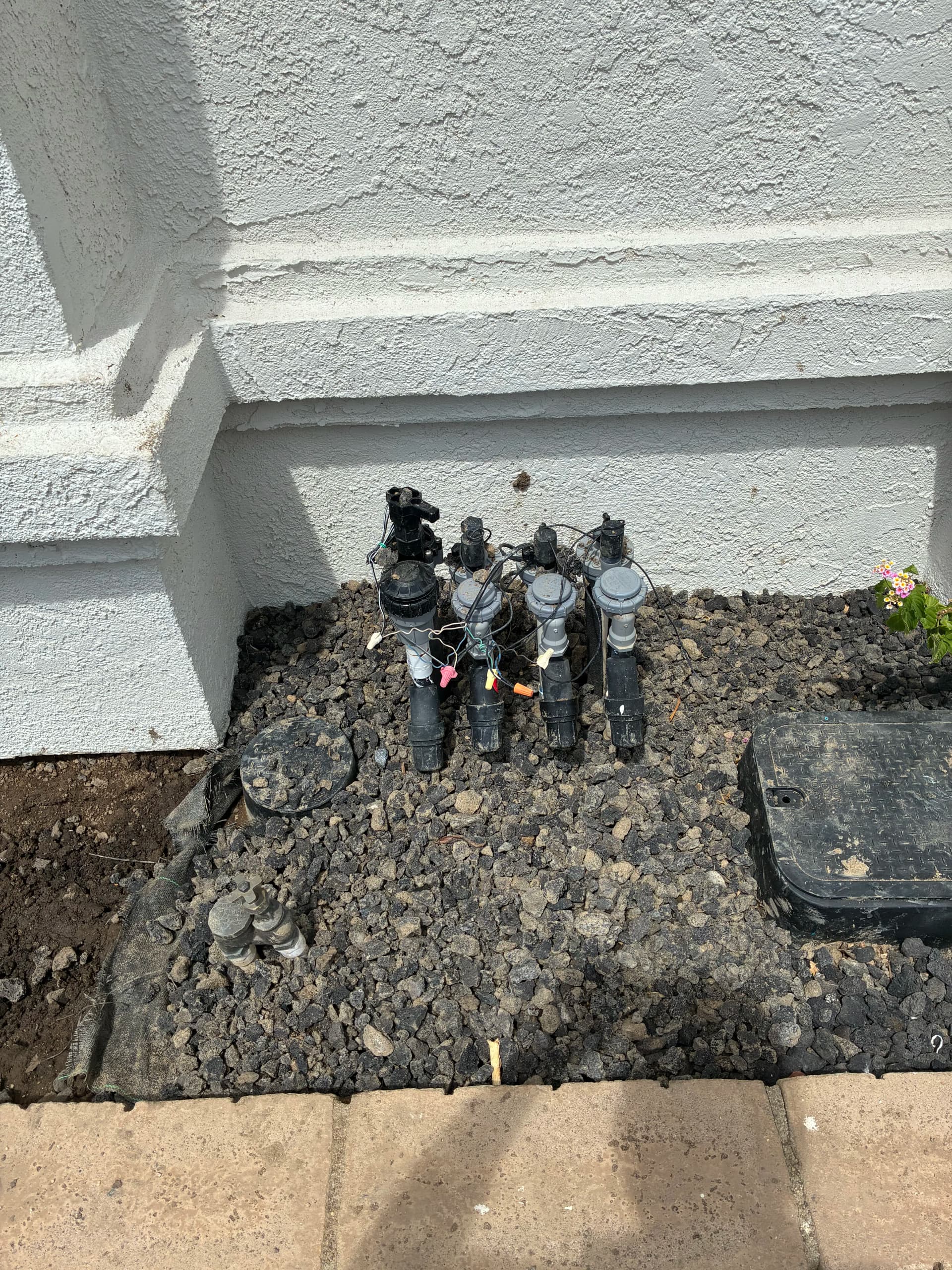
That's what we were dealing with here. A valve manifold that had seen better days, with multiple valves causing problems across the system. The whole setup needed more than a quick patch. It needed a full rebuild to actually get things running right.
We dug in, cleared everything out, and went through each valve component. When you do this kind of work properly, you're not just swapping parts - you're also inspecting the surrounding lines, checking connections, and making sure the wiring is clean. Wire connectors, solenoids, valve bodies - everything gets evaluated as part of our irrigation repair process. The goal is a system that runs reliably, not one that buys you a few more months before the next problem.
The difference between a system that leaks and one that doesn't is usually pretty straightforward: the right parts, installed correctly, with attention paid to the details most people skip. That's what a proper irrigation valve rebuild looks like. Your landscape depends on consistent, controlled watering - and that only happens when the valves are doing their job.
If your yard has soggy spots, zones that won't shut off, or a system that just seems off, it's worth getting it evaluated before the problem gets bigger. An irrigation evaluation is usually the fastest way to know exactly what you're working with.